Articles & Resources

A Ransomware Negotiator Was Working for a Ransomware Gang
A man who was supposed to help victims of ransomware attacks was actually helping the other side.
May 2026Ransomware attacks don't just hit corporations. Small businesses, medical offices, and home offices are increasingly targeted because they carry valuable data and often run with fewer defenses. When a victim hires a negotiator to help reduce a ransom demand, the assumption is that the negotiator is working for them. This case is a reminder that trust in cybersecurity has to be earned and verified, not assumed. The same principle applies to any connected system in your home or business: devices should be segmented, communications should be encrypted, and access should be logged. Whether the threat is a ransomware gang or a compromised device on your local network, the playbook is the same: assume breach, limit blast radius, and never trust what you can't verify.
Cinematic Video vs. Forensic Truth
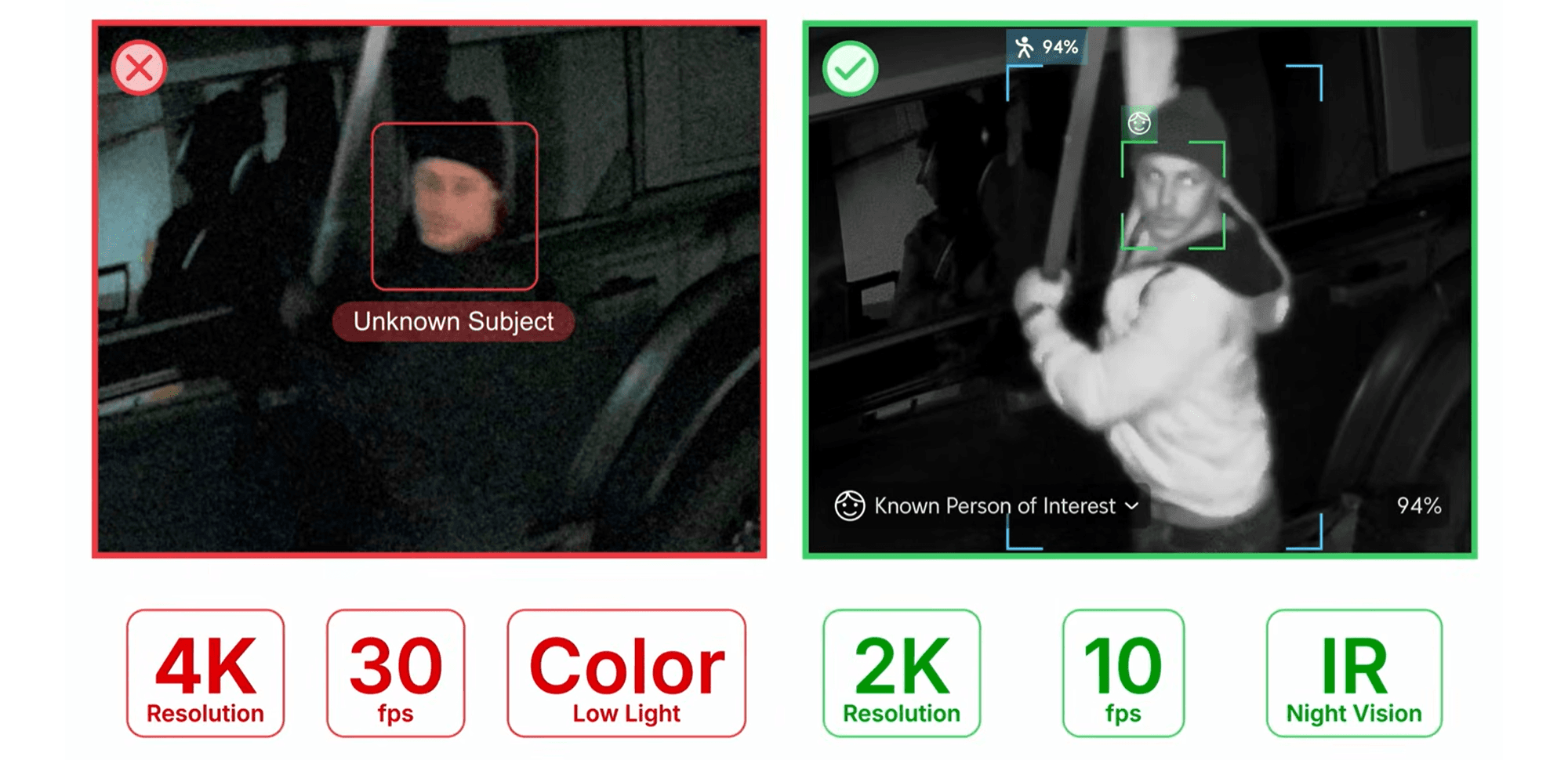
What actually makes a surveillance system effective? A breakdown of camera placement, shutter speed, and infrared performance for footage that matters.
Mar 2026Security cameras are everywhere, but capturing clear, usable evidence is a lot more complicated than just mounting a camera and pressing record. In this video, UniFi Academy takes a closer look at what actually makes a surveillance system effective, from camera placement to shutter speed and infrared performance. It's a helpful breakdown for homeowners, business owners, and anyone building out a security setup who wants footage that does more than just look good on paper.
What Enterprise IT Taught Us About Securing Your Home
The same network security principles that protect hospitals and financial institutions can and should be applied to your connected home.
Dec 2025Enterprise IT teams have spent decades learning how to protect sensitive systems from unauthorized access. The core principles are straightforward: segment the network into isolated zones, restrict communication between devices that don't need to talk to each other, and treat every endpoint as a potential risk. These aren't exotic concepts, they're standard practice in any hospital, bank, or corporate office. What's surprising is how rarely they're applied to residential networks, even in homes with dozens of connected devices. At Elevation, we design every home network using the same playbook: VLANs to isolate cameras from personal devices, firewall rules to prevent IoT gadgets from reaching your laptops and phones, and managed switches that give you visibility into what's happening on your network. It's the same architecture that protects patient data and financial records, scaled down and tailored for your home.
A core theme found in NIST healthcare-related practice guides calls upon organizations to ensure network segmentation between medical or biometric devices and other environments. Network segmentation divides the network into subsections using hardware such as firewalls, impeding a threat actor's ability to compromise an endpoint and impact other devices.

Why Your Smart Home Should Work Without the Internet
Most automation systems rely on cloud servers to function. Here's why local-first control is more reliable, more private, and a better long-term investment for your home.
Apr 2025Most consumer smart home platforms route every command through a cloud server. That means when your internet goes down, or when the provider has an outage, your lights, locks, and automations stop working. Local-first systems process commands on hardware inside your home, so everything responds instantly and keeps running regardless of connectivity. For homeowners who value reliability and privacy, this isn't a nice-to-have; It's the foundation of a trustworthy system.
These incidents expose a critical flaw in cloud-dependent systems: Consumers never truly own their devices. When business interests change or financial pressures mount, companies can, and sometimes must, abandon their customers.
Lighting That Follows the Sun: How Circadian Design Improves Your Home
Your lighting shouldn't fight your body. Circadian lighting adjusts color temperature throughout the day to support sleep, mood, and focus, all automatically.
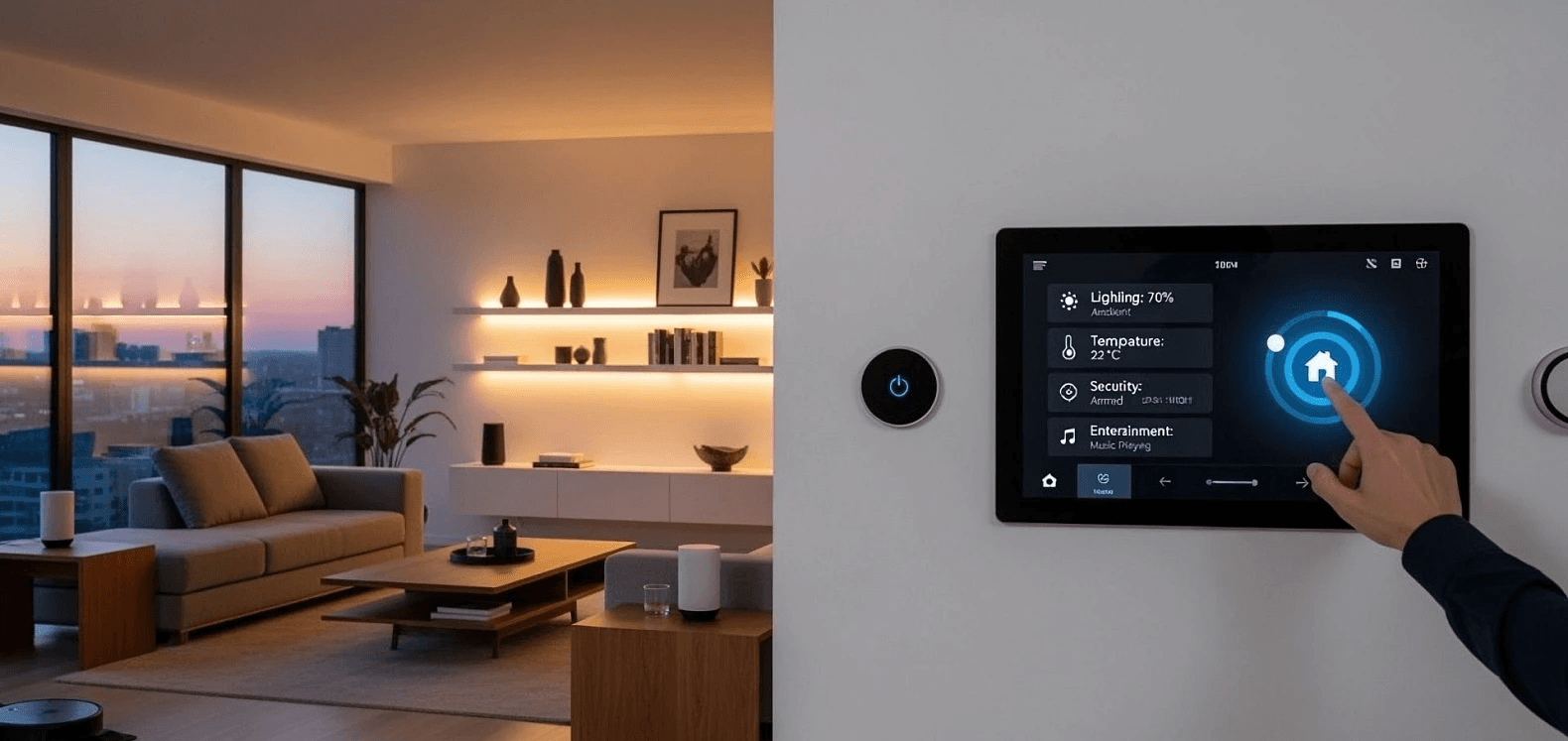
Aug 2025Most homes are lit with static, fixed-temperature light, the same flat white from morning to midnight. But your body expects something different. Natural daylight shifts from cool, energizing tones during the day to warm, amber hues in the evening, and your brain uses those cues to regulate sleep, alertness, and mood. Circadian lighting systems replicate that progression indoors using tunable white LEDs that automatically shift color temperature throughout the day, bright and cool in the morning to support focus, warm and dim in the evening to promote melatonin production and restful sleep. When paired with motorized shading and a smart automation layer, the result is a home that actively supports your wellbeing without you ever touching a switch.
Imagine the world before electricity. You naturally learnt to wake as the sun rose and would head to sleep as the night drew in. Nowadays, the existence of artificial light can disrupt our circadian rhythms because we're seeing light at the wrong time of day.